What changed
Impact
A $13,210 documentary that has changed law in four jurisdictions and policy in two multinational companies.
Rubber Jellyfish is making a difference
Rubber Jellyfish was released theatrically on 26 September 2018. Since then, momentum for the project has grown steadily.
The film has been featured by outlets including Sunrise, Today Tonight, King 5 News and ABC Radio National, and has been screened by activists, organisations, community groups, festivals and universities in over 80 locations around the world. Screenings have been hosted by Sea Shepherd, Balloons Blow, Algalita, NOAA, Southern Cross University, Sunshine Coast Council and dozens more.
Activists are using the film as a conservation tool to push better legislation across the line and create social change that is saving the lives of vulnerable endangered animals.
People walk away from our screenings motivated to spread the word about the environmental damage caused by balloons, and to dispel the mythology that latex balloons are “environmentally friendly”. We hear that the film has been especially useful for marine environmental activists who have been working on marine debris and balloon litter for years. Often they report back that the film was just what they needed to give their message the extra boost – to get better legislation passed and to further public understanding of the issue.
By the numbers
- 80+ screening locations worldwide
- 4 local governments have banned balloon releases
- 2 companies banned balloons across their whole business
- $13,210 total production budget
What the film has changed
Most recent first.
-
July 2019 · Fremantle, WA
Balloon releases banned on government property
After two Rubber Jellyfish screenings organised by local veterinary nurse and marine activist Lisa Jane Hills, balloon releases are now banned from all government properties across Fremantle, with a $125 fine in place. More on the legislation.
-
June 2019 · Kennebunk, Maine
Balloon releases and public helium displays banned
Balloon releases and public displays of helium-filled balloons are now banned in Kennebunk, Maine, following two public Rubber Jellyfish screenings hosted by long-time marine wildlife advocate Will Jones, who has worked for many years to raise awareness of balloon litter.
-
January 2019 · United States
A memorial balloon release averted
The host of our first American screening averted a balloon release planned to follow the memorial for a young man who had died. We are grateful for the compassionate, non-judgemental but informative approach this retired schoolteacher turned screening host used.
-
January 2019 · Perth, WA
A large charity balloon release cancelled
A member of Sea Shepherd learned about a release advertised as the finale of a charity fundraiser and worked with Boycott Balloons Fremantle to stop it. Rubber Jellyfish was cited in the discussions with the organisers that led to the cancellation. Every attendee was to be given a balloon; the organisers reported saving hundreds of dollars by dropping the release.
-
December 2018 · Asia Pacific
Wyndham Destinations banned balloons at all events
The vacation ownership, exchange and rental company banned balloons at all of its events throughout Asia Pacific after a staff member attended the Rubber Jellyfish premiere on the Gold Coast. The decision was covered by Hotel Magazine, Travel Weekly Asia, Hotel Management, Spice News and ETB Travel News.
-
September 2017 · Bainbridge Island, WA
Balloon release ceremonies banned
Bainbridge Island, a community near Seattle, banned the release of balloons after a council member watched the Rubber Jellyfish trailer – before the film itself had even been released.
-
August 2016 · Australasia
Ray White stopped making branded balloons
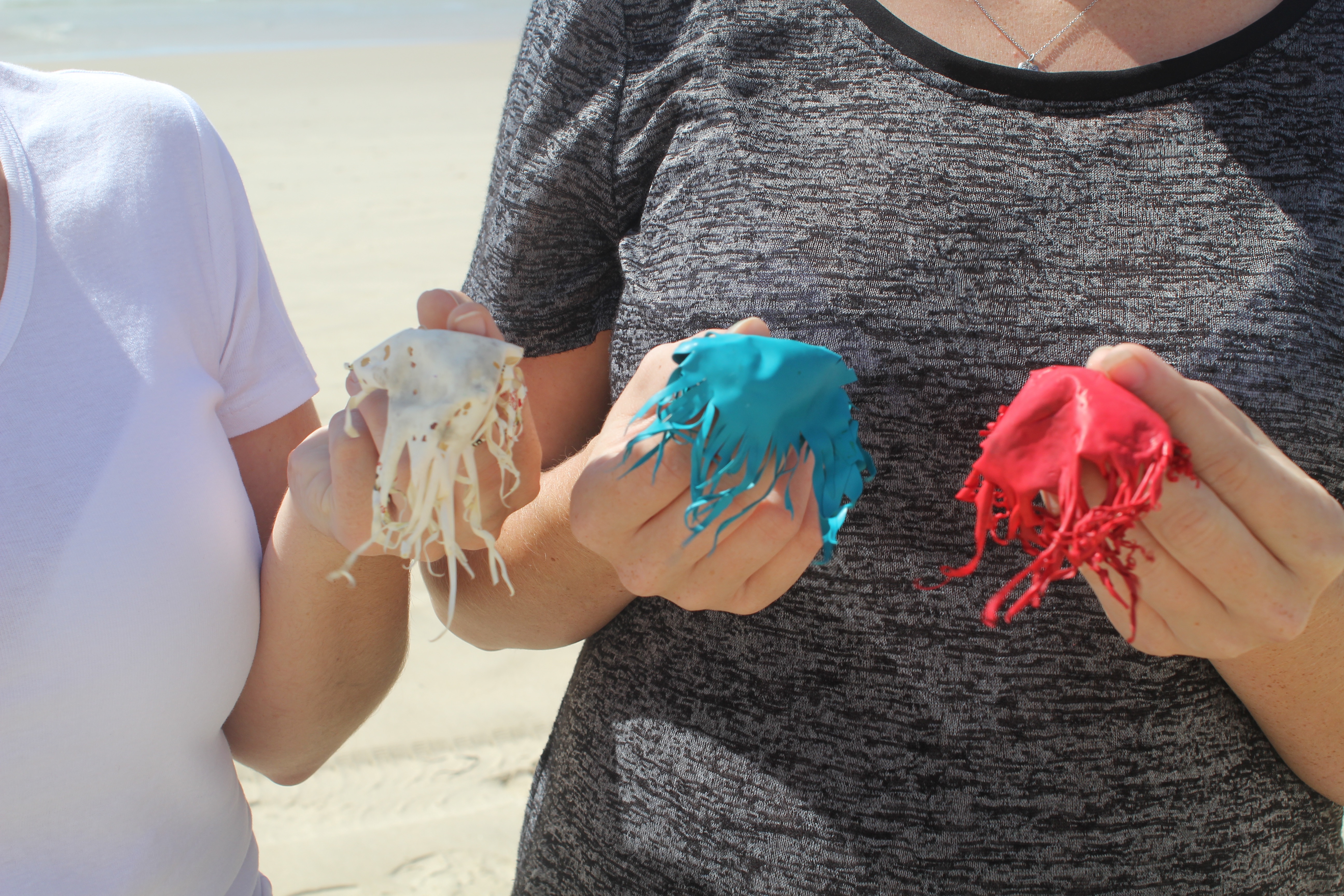
The corporate headquarters of Australasia’s largest real estate company stopped manufacturing branded balloons, previously available to order by every franchise. It followed the filmmaker posting the company a balloon in the jellyfish shape, bearing a Ray White logo, found on a loggerhead nesting beach by volunteers on the Sunshine Coast. Ray White franchises had been ordering roughly 30,000 balloons a year. The story is in the documentary.
If you learn of a planned balloon release
Releases are often called off once someone tells the organisers what actually happens. Usually they are simply under the impression that latex balloons are environmentally friendly.
-
Speak to the organisers
Kindly and without judgement. Most people have never been told. Contact us if you would like support or material to send them.
-
Don’t buy balloons
By far the most effective single thing you can do – and tell people why.
-
Join a beach cleanup
Environmental organisations run community cleanups regularly. Attend one, or organise one.
-
Write to your elected official
Community groups and organisations can hold letter-writing sessions in support of a local ban – particularly if a release is planned.
Ready to do more?
Attending a screening, hosting one, bringing the film into a classroom or funding the education materials – the four routes are set out on one page, ordered by how much time each one takes.